

Works in this collection were published by the Department of Agriculture and Food, Western Australia.
-
Bulletin No 4191 - Inputs for BEEFIN
D. J. Barker, P J. May, and R. G. Grieve
BEEFIN is a computer model (Barker et at. 1986) that calculates profit maximizing diets for finishing cattle to a specified carcass weight and fat thickness. It predicts cattle growth, feed conversion ratio, final liveweight, number of days on feed and amount of available feedstuffs to ... Read more
-
Insect and allied pests of extensive farming
W Woods, P Michael, and M Grimm
Produced in conjunction with the Plant Protection Society of WA. The Society is an organisation of farmers, scientists, commercial representatives and others interested in all aspects of plant protection. It provides essential liaison between farmers, industry & Government. It aims to inform members, Government, Industry ... Read more
-
Spacing water points in the southern pastoral areas of Western Australia
Don Burnside, Adrian Williams, and Peter Curry
An inadequate distribution of watering points in our pastoral lands, particularly in the saltbush/bluebush pasture, has caused localisized land degradation close to waters and reduced animal productivity (particularly in stressful times). From experimentation and observation, some generalised recommendations for water supply distribution in pastoral areas ... Read more
-
Artificial Insemination of ewes with fresh semen
Jonathon Hunton and Keith Kroker
This Bulletin gives a basic outline of the technique for artificial insemination (Al) of sheep. The topic is large and incorporates several areas of reproductive physiology which can only be given cursory treatment in this publication. Much of the information discussed is also applicable to ... Read more
-
Beef in Western Australia
Western Australian Department of Agriculture
Western Australia's first European settlers introduced cattle for both milk and meat soon after a permanent colony was established in 1829. From this time, most Western Australian beef was produced as a side-line of t he dairy industry.
-
Bulletin 4133 - Fungal diseases of pasture legumes in Western Australia
M. J. Barbetti
Subterranean clover (Trifolium subterraneum L.) is the most important annual pasture legume in Western Australia, forming the basis of some 6.5 million ha of annual pastures. The success of subterranean clover may be attributed to its ability to increase soil fertility as a consequence of ... Read more
-
Bulletin 4152 - Sheep in Western Australia
R J. Suiter
Western Australia's sheep industry started in the early 1830s when the first flock-owners grazed their sheep on extensive areas of native vegetation, often by shepherding on unfenced country. Later, farm flocks built up as settlers cleared and fenced land for cultivation, and 'pastoral' or 'station' ... Read more
-
Bulletin No 4146 - Commercial production of pawpaws in Western Australia
J. R. Burt and B. L. Toohill
The papaw (Carica papaya L.) is a native plant of Central America. It produces its highest yields of good quality fruit in tropical regions.
The tree is short-lived and rarely produces crops for more than two or three years. It is quick growing and soon ... Read more
-
Bulletin No 4151 - Pigs in Western Australia
N W. Godfrey, B M. Goss, and H. G. Payne
Pig raising was originally a sideline on many Western Australian farms, being a convenient and profitable way to dispose of 'skim' milk on butterfat dairy farms and 'seconds' quality grain on wheat farms.
Most farmers ran pigs in large sties or small paddocks. With little ... Read more
-
Bulletin No 4158 - Western Australian beef industry - economic constraints and future market outlook
Alan Peggs
Since the mid 1970s there has been a substantial decline in cattle numbers in Western Australia. Most of this decline has occurred in the agricultural areas.
Much of the decline in cattle numbers can be attributed to low real cattle prices.
As a result of ... Read more
-

Bulletin No 4167 - Futures markets
Roderick Grieve
Most people have heard of futures but many are unsure of what they are or how they work. The primary purpose of futures is to reduce the risks associated with selling or buying commodities whose price fluctuates. The futures market operates by bringing buyers and ... Read more
-
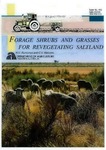
Forage shrubs and grasses for revegetating saltland
H V. Runciman and C V. Malcolm
Salt tolerant shrubs and grasses are used for forage production from salt-affected farmland. This Bulletin is designed to assist in recognition of the important species in Western Australia and to provide information on their use. The species listed have more forage value than some natural ... Read more
-
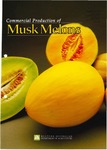
The commercial production of musk melons
Neil Delroy and Harry Gratte
This research publication covers commercial production of musk melons, Cucumis melo L., that belong to the cucurbit family. The must melon group includes rock melons (cantaloupes), honey dew melons, Japanese musk melons, hami melons and a number of other types of musk melon.
-
Trees for windbreaks on swan coastal plain farms
Leon English; Ken Angell; and Metropolitan District Office, Department of Agriculture and Food, Western Australia
Strong easterly and south-westerly winds are a feature of the Swan Coastal Plain and we receive frequent inquiries about which tree species are suitable for planting as windbreaks. When selecting trees for windbreaks you must match the species to the various soil types which occur ... Read more
-
Bulletin 4358 - Western Australian registered field crop scheme production rules
Mark Holland and Peter Hill
The Western Australian Registered Field Crop Scheme is an industry cooperative scheme entered into voluntarily by the participants. Agriculture Western Australia, through its AGWEST Plant Laboratories business unit, administers the scheme and supervises industry agreed production and marketing guidelines.
The Registered Field Crop Scheme differs ... Read more
-

Plain wire fencing for pastoral lands
A McR Holm
The need to fence for efficient livestock control was recognised early in the history of the pastoral industry in Western Australia. Fence design, materials and layout have all undergone many changes since the 1880s. Modern fences have 4 or 5 strands of high tensile light ... Read more
-
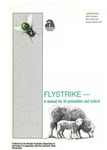
Bulletin No 4101 - FLYSTRIKE - a manual for its prevention and control
N Monzu Dr
The sheep blowfly is still regarded as the Australian sheep industry's mostdamaging pest. Estimates of the cost to the industry, through production losses and prevention and control measures, exceed $ I 00 million in a year. This bulletin comprises the most relevant information available on:
... Read more -
Facing a drought
J A C Smith
This booklet is aimed at helping you decide on strategies, in this and future droughts, in relation to money flow, animal management and cropping. It highlights the technical problems associated with different strategies and how to combat them.
-
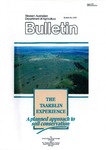
The Taarblin experience : a planned approach to soil conservation
Greg Astbury, Owner/Manager of Taarblin and Tim Negus
Many farms in Western Australia were cleared and developed before there was a full and clear understanding of the effects of bush clearing - that is salinization of soil and water supplies, wind and water erosion, waterlogging and soil structure decline. The productive capacity and ... Read more
-
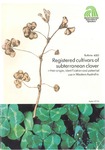
Registered cultivars of subterranean clover : their origin, identification and potential use in Western Australia.
W. J. Collins, B J. Quinlivan, and C M. Francis
The annual species subterranean clover (Trifolium subterraneum L.) is the most important pasture legume in Western Australia. In addition to providing nutrious feed for livestock, it is an important source of nitrogen for non-leguminous species in pastures for the State's ceral crops.
-
Wine making in small quantities
P. B . Gherardi
This publication aims to guide the amateur wine maker producing small quantities of wine from fresh grapes. It does not explain the changes that occur when grape juice is fermented into wine, nor does it discuss the technology required to make commercial quantities of wine.
-
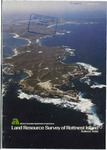
Land resource survey of Rottnest Island - an aid to land use planning
P A. Hesp, M R. Wells, B H R Ward, and J R H Riches
This report provides a description of the landforms, soils and vegetation of Rottnest Island. In addition, it provides a discussion of the relative capability of each of the landforms of the island to sustain various forms of development. The primary objective of this work is ... Read more
-
Bulletin No 4077 - The Avocado in Western Australia
M. G. Hawson and Jacqui Davis
The avocado, Persea americana, is a member of the laurel family, and a close relative of the common shade tree, camphor laurel. It is native to Mexico, Central America, West Indies and nearby areas where the fruit was often a major part of the diet ... Read more
-
Varieties of cheese
T A. Morris
While Cheddar cheese is by far the main type as far as English speaking countries are concerned, it is only one of a large number of varieties of cheese which are becoming more universal in production and consumption. In other than English speaking countries Cheddar ... Read more
-
Eucalypts of Western Australia
C A. Gardner and T E.H. Alpin
The series Trees of Western Australia, which appeared in The Journal of Agriculture of Western Australia, was commenced in 1952 by Charles Austin Gardner, Government Botanist and Curator of the Western Australian Herbarium from 1929 to1960. Until his death in 1970 Gardner published in the ... Read more