

Works in this collection were published by the Department of Agriculture and Food, Western Australia.
-
Bulletin 4270 - Meat quality in beef cattle
Brian McIntyre
Meat quality is the sole concern of the consumer once the product reaches the supermarket shelf. Breeding, feeding or any other factors that may have been important to the beef producer have no influence over the buyer's choice. Meat quality can be divided into two ... Read more
-
Bulletin 4278 - How to use wide furrow sowing for improved crop production on water repellent sand
Paul Blackwell, Grant Morrow, and Tony Webster
Wide furrow sowing is a method for successfully establishing crops of lupins or cereals on non-wetting sands, and improving crop establishment on non-repellent sands. The same principles can be used to assist establishment of fodder shrubs and long-term pasture (e.g. tagasaste and Rhodes grass).
-

Bulletin 4279 - Streamlining - an environmentally sustainable drainage network for the Swan Coastal Plain (Peel-Harvey Catchment)
Garry Heady and Neil Guise
Community Catchment Centre Pinjarra
A network of over 1400 kilometres of drains and modified natural waterways constructed by the Public Works Department criss-crosses the Peel-Harvey catchment. There are also over 3300 kilometres of minor drains and natural waterways in this same region.
The expansion of ... Read more
-
Bulletin 4283 - Nitrogen fertilisers for cereal production
M. G. Mason
Because fertiliser prices are high, it is important to understand what affects the response to fertilisers by crops.
Among the many factors influencing crop response to nitrogen applications, the most important are the season, soil type, paddock history, time of application and source of nitrogen. ... Read more
-
Bulletin 4294 - Virus diseases of Lupins
Roger Jones
Two virus diseases pose a serious threat to lupins. These are caused by cucumber mosaic virus (CMV), which induces diseases in narrow-leafed and yellow lupins, and bean yellow mosaic virus (BYMV), which infects all types of cultivated lupins. The effects of the viruses on lupin ... Read more
-
Goats - nutrition and feeding
Andrew C. Dunlop
The nutritional needs of goats are similar to those of sheep. They both require energy, protein, vitamins, minerals and water to survive and be productive. For optimum performance these nutrients should be supplied constantly and in relatively fixed proportions. An excess of protein, vitamins or ... Read more
-

Bulletin 4247 - Introduction to commercial mushroom growing
Margaret Graham
Mushroom cultivation began in Australia in the 1930s in the then incomplete and unused Circular Quay railway tunnel in Sydney. In the 1950s most mushrooms were grown in heaped or 'ridge-beds' of compost in disused railway tunnels.
In the last 15 to 20 years there ... Read more
-

Bulletin 4256 - Pecan nut cultivation
Aldo Labrosciano
Pecans Carya illinoensis, an indigenous species to Northern America, are successfully grown between the latitudes of 25° and 35°. There is considerable variation in size and flavour of the 1000 or more varieties of the nuts.
Large scale production is concentrated in north America, Israel ... Read more
-

Bulletin 4265 - Termites
Peter Davis
Termites are small, soft-bodied, social insects that feed on wood, grass, dead leaves, bark, humus, fungi or the dung of herbivore. They are commonly known as white ants, but are not related to true ants.
There are over 2300 species of termite of which about350 ... Read more
-
Bulletin 4267 - Growing macadamia nuts
John Dick and Alec McCarthy
The macadamia (Macadamia integrifolia and M. tetraphylla) are native Australian trees that have been developed as a commercial food crop.
About two million macadamia trees are planted in Australia over 6000 hectares. These produce about 12,000 tonnes of nuts. New South Wales and Queensland account ... Read more
-

Bulletin 4272 - Growing bananas in Carnarvon
Terry Hill
The banana industry in Carnarvon began with small plantings. plantings in the 1940s. Since that time the industry has grown and become the mainstay of the region's horticulture industry.
In 1991, there were 360 ha planted to bananas and the industry was valued at $18.2 ... Read more
-
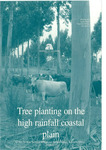
Bulletin 4274 - Tree planting on the high rainfall coastal plain
Don Bennett and Richard George
Careful planning can mean the difference between the success or failure of a tree planting program . Healthy , well-e stablished trees stand a better chance of survival, grow faster and are more resistant to insect attack. The need for time-consuming watering in summer is ... Read more
-
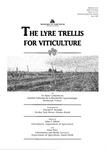
Bulletin No 4242 - The Lyre Trellis for viticulture
Alain Carbonneau Dr, Vincent P. Desplat, John F. Elliott, and Peter Watt
The lyre vine training system uses wide rows, an open canopy, and shoot positioning to increase grape maturity and quality while maintaining production levels. It is so named because the end-on view of the vine canopy trained to this type of trellis resembles the shape ... Read more
-
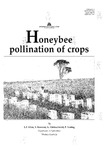
Honeybee pollination of crops
Lee Allan, V. Kesvan, G. Kleinschmidt, and P. Anning
Pollination of horticultural and agricultural crops is being recognised throughout Australia by quality growers who wish to improve crop quality and quantity, to increase their returns from produce sold on local and export markets. Some growers are able to target specific high value markets using ... Read more
-
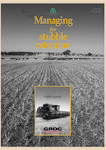
Managing for stubble retention
Linda Leonard
One of the objectives of sustainable farming systems is to retain as much cover on the soil as possible – this helps to maintain soil structure and protects the soil from erosion.
Improving productivity, maintaining soil structure, and stabilising fragile soils are some of the ... Read more
-
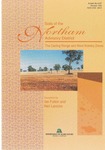
Soils of the Northam Advisory District. Volume 3. The Darling Range and West Kokeby zones
Ian Fulton and Neil Clifton Lantzke
This manual describes the soils of the Department of Agriculture's Northam advisory district. Information is provided on the characteristics of each soil, its capability is discussed and yield estimates for the major land uses are given.
Designed for use by farmers and Department of Agriculture ... Read more
-
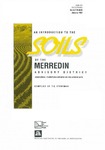
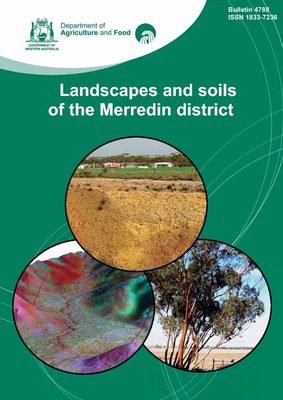
An introduction to the soils of the Merredin advisory district
T C. Stoneman and National Soil Conservation Program (Australia)
With descriptions, illustrations and notes on nine common soils.
-
Bulletin 4241 - Chemical control of insect pests in field crops and pastures
T. P. Quinn, G. P. Mangano, and P. J. Michael
Chemicals currently registered in Western Australia for use against pests of field crops and pasture are given in the table below. Trade names are listed alongside each chemical formulation.
Department of Agriculture Bulletin 4185 "Insect and allied pests of extensive fanning" will help you identify ... Read more
-
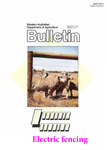
Bulletin No 4131- Electric fencing
Dean Maughan
Fencing has always been an integral part of our agricultural system. We need fences for stock control and pasture management. Traditionally, fences have been strong and robust physical barriers. The strength and height of the fence kept domestic animals confined. For many years, conventional fences ... Read more
-

Bulletin No 4216 - Broadscale boom spraying
Roger Doyle, Gary Dorr, Des Gilbey, and John Peirce
For spraying to be effective it must do the job required at a minimum cost, with no unwanted side effects. It is impo1tant to use the right chemical at the right rate, at the right tin1e and in the best conditions.
It is just as ... Read more
-
Bulletin No 4237 - Growing nashi in Western Australia
Allan Price
Nashi is the Japanese word for Pear. It is used in this context to describe pears of Asian origins, developed from Pyrus pyrtfolia as distinct from European pears (Pyrus communis).
Nashi have originated from two major areas, Japan and Korea/China.
-

Coastal rehabilitation manual
Veronica P M Oma, D M. Clayton, J. B. Broun, and C D M. Keating
Provides an overview of the coastal environment to ensure that the natural environment and coastal processes are considered properly. Describes how to develop a successful coastal rehabilitation strategy and detail rehabilitation techniques applicable to Western Australia. Lists sources of further advice and information.
-
Description and key to the identification of grasses in South-Western Australia
J G. Paterson
The grasses comprise one of the world's largest families of flowering plants, with about 670 groups or genera containing over 9000 individual types or species distributed throughout the world. Over 130 groups have been recorded in Western Australia but probable that the list is far ... Read more
-
Monitoring and managing soil acidity
Fionnuala Frost, Extension Officer, Northam
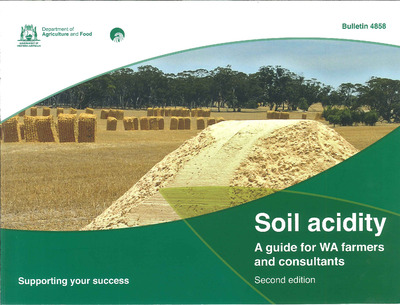
This Bulletin provides information on how to identify acid soils and remedy the problem of excessive acidity. Material in this handbook is suitable for broadscale agricultural systems, and perennial and permanent pastures in the medium and higher rainfall areas of the State.
Acidity of both ... Read more