

Files
Download Complete Bulletin (14.8 MB)
Publication Date
7-1982
Series Number
4077
Abstract
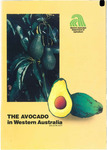
The avocado, Persea americana, is a member of the laurel family, and a close relative of the common shade tree, camphor laurel. It is native to Mexico, Central America, West Indies and nearby areas where the fruit was often a major part of the diet of the Indians.
Avocado flesh contains good levels of protein, fat, phosphate, potash, thiamin, riboflavin and ascorbic acid and exceeds those in such fruits as apples, apricots and bananas.
The tree is an evergreen, although some varieties lose their leaves for a short time before flowering. The canopy of varieties such as Fuerte, Rincon and Sharwil, is low, dense and spreading, 5 to 7 metres high and 8 to 12 m in diameter, but other varieties are tall and upright growing to 20 m high. Its limbs are easily broken by strong winds or heavy crops.
Avocado leaves are often pubescent (finely-haired) and reddish when young, becoming smooth, leathery and dark green when mature. The flowers are yellowish-green, about a centimetre in diameter and occur in clusters.
Number of Pages
16
ISSN
0729-0012
Publisher
Western Australian Department of Agriculture
City
Perth
Keywords
Avocado, Western Australia
Disciplines
Agribusiness | Fruit Science | Horticulture | Plant Sciences
Recommended Citation
Hawson, M G,
and
Davis, J.
(1982), Bulletin No 4077 - The Avocado in Western Australia. Western Australian Department of Agriculture, Perth. Bulletin 4077.
https://library.dpird.wa.gov.au/bulletins/303
Maps
Maps are not included as part of the complete document download. If this report contains a map, it will be available in the individual parts list below.
This file is 14.8 MB. Files over 3MB may be slow to open. For best results, right-click and select "save as..."
Included in
Agribusiness Commons, Fruit Science Commons, Horticulture Commons