


-
Bulletin 4307 - Grass control in pastures using herbicides
Alexandra Wallace
This Bulletin discusses three methods for herbicide control of grasses in pastures:
- pasture manipulation, in the early stages of pasture growth;
- spray-topping late in the growing season; and
- hay freezing, late in the growing season.
-
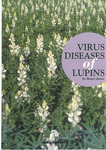
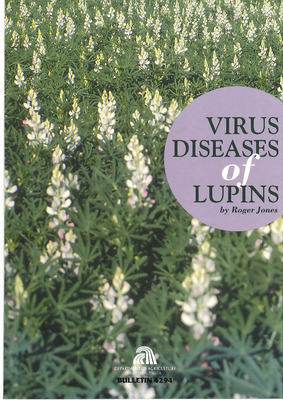
Bulletin 4294 - Virus diseases of Lupins
Roger Jones
Two virus diseases pose a serious threat to lupins. These are caused by cucumber mosaic virus (CMV), which induces diseases in narrow-leafed and yellow lupins, and bean yellow mosaic virus (BYMV), which infects all types of cultivated lupins. The effects of the viruses on lupin ... Read more
-

Bulletin 4265 - Termites
Peter Davis
Termites are small, soft-bodied, social insects that feed on wood, grass, dead leaves, bark, humus, fungi or the dung of herbivore. They are commonly known as white ants, but are not related to true ants.
There are over 2300 species of termite of which about350 ... Read more
-

Analysis of black point in wheat
J M. Wilson
Fungal staining (black point) of wheat can reduce the quality of grain. The most serious problem is a discolouration of products. Discolouration is a consequence of infection by microorganisms. The most likely cause in Western Australia is a species of the common fungus Alternaria. Infection ... Read more
-

Bulletin No 4216 - Broadscale boom spraying
Roger Doyle, Gary Dorr, Des Gilbey, and John Peirce
For spraying to be effective it must do the job required at a minimum cost, with no unwanted side effects. It is impo1tant to use the right chemical at the right rate, at the right tin1e and in the best conditions.
It is just as ... Read more
-
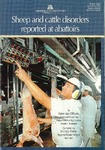
Sheep and cattle disorders reported at abattoirs
Michael Paton Dr
Meat inspectors at abattoirs record a lot of information about diseases and disorders of sheep and cattle. This information is mentioned briefly in stock health reports that are sent to producers who consign animals to Robb Jetty or E.G. Green abattoirs.
Department of Agriculture veterinarians ... Read more
-
Bulletin 4241 - Chemical control of insect pests in field crops and pastures
T. P. Quinn, G. P. Mangano, and P. J. Michael
Chemicals currently registered in Western Australia for use against pests of field crops and pasture are given in the table below. Trade names are listed alongside each chemical formulation.
Department of Agriculture Bulletin 4185 "Insect and allied pests of extensive fanning" will help you identify ... Read more
-
Bulletin No 4222 - Management of properties with pesticide residues - Information for farmers with properties affected by organochlorine pesticide residues
Farran Dixon
This publication is produced by the Department of Agriculture to help farmers who have been affected by the pesticide residue problem. Some material from previous issues has been included, so that as much information as possible is contained in a single publication. We suggest you ... Read more
-
Bulletin No 4219 - Chemical control of insect pests in field crops and pastures
T. P. Quinn, G. P. Mangano, and P. J. Michael
Chemicals currently registered in Western Australia for use against pests of field crops and pasture are given in the following tables. Trade names are listed alongside each chemical formulation.
Department of Agriculture Bulletin 4185 "Insect and allied pests of extensive farming" will help you identify ... Read more
-
A guide to barbed wire fence construction for range cattle control
J S. Addison
The sub-division of pastoral leases with fences promotes better control of the grazing animal, reduces mustering costs, and simplifies the imposition of management strategies designed to lift the productivity of pastures and stock.
However, fencing represents a considerable capital investment and a commitment to fence ... Read more
-
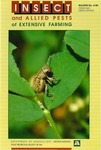
Insect and allied pests of extensive farming
W Woods, P Michael, and M Grimm
Produced in conjunction with the Plant Protection Society of WA. The Society is an organisation of farmers, scientists, commercial representatives and others interested in all aspects of plant protection. It provides essential liaison between farmers, industry & Government. It aims to inform members, Government, Industry ... Read more
-
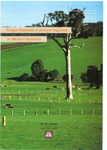
Bulletin 4133 - Fungal diseases of pasture legumes in Western Australia
M. J. Barbetti
Subterranean clover (Trifolium subterraneum L.) is the most important annual pasture legume in Western Australia, forming the basis of some 6.5 million ha of annual pastures. The success of subterranean clover may be attributed to its ability to increase soil fertility as a consequence of ... Read more
-
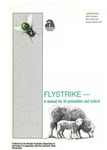
Bulletin No 4101 - FLYSTRIKE - a manual for its prevention and control
N Monzu Dr
The sheep blowfly is still regarded as the Australian sheep industry's mostdamaging pest. Estimates of the cost to the industry, through production losses and prevention and control measures, exceed $ I 00 million in a year. This bulletin comprises the most relevant information available on:
... Read more -
Facing a drought
J A C Smith
This booklet is aimed at helping you decide on strategies, in this and future droughts, in relation to money flow, animal management and cropping. It highlights the technical problems associated with different strategies and how to combat them.
-
Virus, viroid, mycoplasma and rickettsial diseases of plants in Western Australia
L K. Price and George McLean
Provides details of the virus, viroid, mycoplasma and rickettsial diseases recorded on plants in Western Australia. To establish these records, a range of tests have been used including sap transmission; leaf dip electron microscopy; aphid transmission and serology. The authenticity for each record is noted ... Read more
-
Toxic ferns of Western Australia
T E H Aplin, P Steele, and M C. Nottle
Botanical descriptions and notes on the distribution of six species of ferns are given. These plants contain the enzyme thiaminase, which may induce thiamin deficiency, or other constituents toxic to animals. The clinical signs of both thiamin deficiency and fern toxicity in affected livestock are ... Read more
-
An entomological review of cotton growing in the Ord river area of Western Australia
W M. Woods and P J. Michael
Cotton was one of the most difficult crops, particularly with regard to pest control, which could have been chosen for Ord farmers. It would seem unwise to allow large scale soybean culture before some of the crop's serious pest problems have been solved without resort ... Read more
-
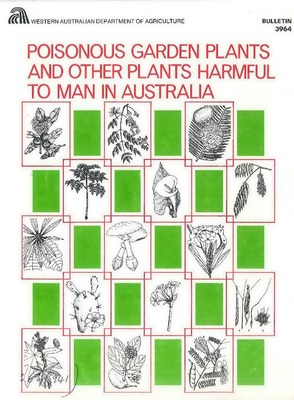
Poisonous garden plants and other plants harmful to man in Australia.
T E H Aplin
A number of commonly grown garden plants and many weeds found in gardens are know to be poisonous. Many species found outside garden situations are also harmful to man. All of these are potentially dangerous, particularly to children who are more likely to chew them. ... Read more
-
Bulletin No 3863 - Plants which cause Kimberley horse disease
A. L. Payne
Crotalaria crispata and Crotalaria retusa (Rattlepod), two plants responsible for Kimberley horse disease*, are, unfortunately, fairly widespread throughout the Kimberleys. Both species are apparently toxic in all stages of growth.
This bulletin is to assist pastoralists to:-
• Identify the two plants;
• Recognise the ... Read more
-
Bulletin No 3993 - The control of saffron thistle
G. A. Pearce
Saffron thistle is a primary noxious weed and is widespread throughout the drier parts of Western Australia. When growing in pasture its prickly growth habit discourages animals from grazing amongst it so that its presence results in the loss of feed. In crops it reduces ... Read more
-
Bulletin 3148 - Weeds in lawns
G. A. Pearce and R. D. Royce
IDENTIFICATION OF WEEDS IN LAWNS
Accurate identification of weeds is the first principle of weed control with modern chemicals. This is as true for weeds in lawns as any other weeds.
THE CONTROL OF WEEDS IN LAWNS
Most lawns have weeds growing in them at ... Read more
-
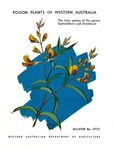
Poison plants of Western Australia : the toxic species of the genus Gastrolobium and Oxylobium.
T E H Aplin
The toxic species of the genera Gastralobium and Oxylobium are a unquie group of poison plants whch have cause considerable economic loss to stock-raisers in Western Australia ever since early days of settlement.
-
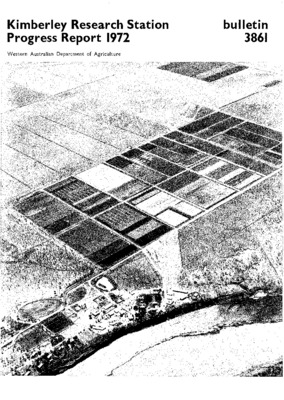
Bulletin No 3861 - Kimberley Research Station - Progress report 1972
J. R. McAlpine, R. H. Gunn, P. Jakobsen, R. Wetselaar, J. J. Basinski, N. J. Thomson, A. G. L. Wilson, D. H. Mackenzie, A. J. Millington, D. F. Beech, P. C. Owen, B. G. Williams, C. G. Blunt, and A. McR Holm
The systematic investigations of the potential of the Ord area for irrigated farming began during the Second World War when the possibilities of damming the river were first examined, initial soil survey was carried out, and agricultural experiments started. The Kimberley Research Station was established ... Read more
-
Bulletin No 3768 - Submitting plants for disease identification
M D. Marcley
THERE are several important points to remember when submitting plant material for disease identification by the Department of Agriculture's Plant Pathology Branch.
Firstly it is very important to collect a suitable sample because it is very difficult to determine the cause of a plant disease ... Read more
-
Bulletin No 3547 - Kimberley Research Station - Progress report 1968
Western Australian Department of Agriculture
Rivers flowing to the Gulf of Carpentaria and the Timor Sea have been estimated by hydrologists to carry about three times the water transported annually over the Murray drainage system and the South Eastern slopes which, together, comprise the highly settled agricultural areas of South ... Read more
Printing is not supported at the primary Gallery Thumbnail page. Please first navigate to a specific Image before printing.