

Listed here are books and book chapters written or contributed to by our staff. These works can be monographs in any format, printed works, ebooks or ibooks.
-
Bread wheat anther culture
Sue Broughton, Marieclaire Castello, Li Liu, Julie Killen, and Christopher McMullan
Doubled haploid (DH) technology can rapidly deliver fixed lines for breeding and research purposes, especially in crops like wheat (Triticum aestivum L.). In Western Australia, we have developed an anther culture protocol that generates more than 12,000 bread wheat DH lines annually. Key aspects of ... Read more
-
Role of recreational fisher information in fisheries management
Rebecca M. Krogman, Stephen M. Taylor, Aaron J. Adams, Ross E. Boucek, Steven M. Lombardo, Chelsey A. Crandall, Susan F. Steffen, Alejandro Acosta, Eduardo Bone Moron, Sepp Haukebo, Kieran Hyder, Zachary M. Radford, and Warren M. Potts
Fisheries managers work with the three components of fisheries—biota, environment, and people - to achieve recreational, stewardship, and socioeconomic goals. Although manipulation of biota and the aquatic environment remains popular (e.g. harvest regulation, protecting or enhancing habitats, and guarding water quality), the human dimension of ... Read more
-

Strategic tillage for sustaining the productivity of broadacre cropping in the arid and semi-arid regions of Southern Australia
Gaus Azam, Md. Shahinur Rahman, and Kanch Wickramarachchi
Conventional tillage, usually practised before every cropping cycle, was proven damaging and unsustainable and was replaced by conservation agriculture (CA) using no-till systems following the ‘dustbowls’ incident in the USA. However, the continuous practice of CA has brought new soil and agronomic challenges, such as ... Read more
-
Subsoil acidity and aluminum toxicity: Measurement, formation, and management strategies in conservation farming systems
Geoffrey C. Anderson, Nanthi Bolan, James Easton, David J M Hall, Rajesh Sharma, Shahab Pathan, and Richard W. Bell
Soil acidity and aluminum (Al) toxicity are significant soil constraints for agricultural production worldwide. Soil acidification, or a decrease in soil pH, is a natural process increased by agriculture due to product removal and nitrate leaching. Its effect on plant production is measured by dividing ... Read more
-
Chapter Two: Distribution, characteristics and management of calcareous soils
Nanthi Bolan, Prashant Srivastava, Cherukumalli Srinivasa Rao, P V Satyanaraya, Geoffrey C. Anderson, Shiv Bolan, Gerhardus P. Nortje, Raelin Kronenberg, Sougata Bardhan, Lynette Abbott, Haochen Zhao, Promil Mehra, S V Satyanarayana, Naser Khan, Hailong Wang, Jorg Rinklebe, Kadambot H M Siddique, and M B Kirkham
-
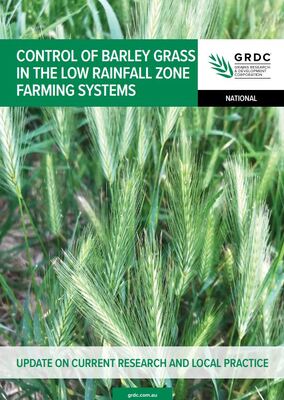
Control of Barley Grass in the Low Rainfall Zone Farming Systems
Gurjeet Gill and Catherine Borger
Barley grass infestations of cereal crops have increased in southern and western Australia. GRDC partners in these regions tested localised integrated weed management strategies at demonstration sites in key low-rainfall zones.
This publication captures the results of this research and on-farm practices that are working ... Read more
-

Sandy Soil Constraints Organic and Clay Amendments to Improve the Productivity of Sandy Soils
Amanda Schapel, Richard Bell, Simon Yeap, and David Hall
Deep sands occupy globally over 900 million hectares. In addition, large areas of soils have sandy A horizons overlaying B horizons with significant amounts of clay. The sand content of these soils varies but more importantly variations in the minor clay and organic matter constituents ... Read more
-
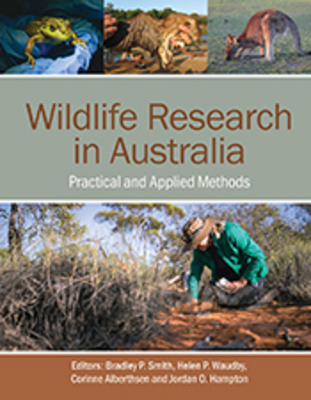
Chapter 13: Research methods for marine and estuarine fishes
Bonnie J. Holmes, Samuel M. Williams, Adam Barnett, Cynthia Awruch, Leanne M. Currey-Randall, Luciana C. Ferreira, Charlie Huveneers, Rob L. Jones, Samantha J. Nowland, Andrea Taylor, Sean R. Tracey, and Daniela Waltrick
Wildlife Research in Australia: Practical and Applied Methods is a guide to conducting wildlife research in Australia. It provides advice on working through applications to animal ethics committees, presents general operating procedures for a range of wildlife research methods, and details animal welfare considerations ... Read more
-
Chapter 31: Sharks, rays and chimaeras
Bonnie J. Holmes, Samuel M. Williams, A Barnett, Kathy A. Townsend, Barbara E. Wueringer, Ross K. Daley, Christine L. Dudgeon, Asia Armstrong, Christopher Henderson, Brittany Finucci, Charlie Huveneers, Paul A. Butcher, Kevin Crook, Jamie Hicks, Cassandra L. Rigby, Christopher Izzo, Michelle A. Treloar, Adrian N. Gutteridge, and Stephen M. Taylor
Wildlife Research in Australia: Practical and Applied Methods is a guide to conducting wildlife research in Australia. It provides advice on working through applications to animal ethics committees, presents general operating procedures for a range of wildlife research methods, and details animal welfare considerations ... Read more
-
Sand and Gravel Subsoils
Craig Scanlan, Karen Holmes, and Richard Willian Bell
Approximately 5 and 29% of soils used for crop production globally have a sand or gravelly subsoil. The proportion of cropping soils with sand subsoil is greatest in Africa and Australia and Oceania. The countries with the greatest area of soil with gravel subsoil used ... Read more
-
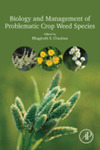
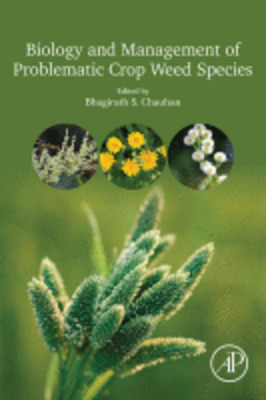
Biology and Management of Problematic Crop Weed Species
Catherine Borger, Joel Torra, Aritz Royo-Esnal, Laura Davies, and George Newcombe
Bromus diandrus and Bromus rigidus are internationally distributed weeds, particularly common in rain-fed, dryland cereal cropping regions in Mediterranean climates. The taxonomic structure within the Bromus genus is unclear, and it is not apparent if B. diandrus and B. rigidus are one species or two. ... Read more
-

Primary Industries Development Research Highlights 2021
Department of Primary Industries and Regional Development and Tim Scanlon
The Primary Industries Development Research Highlights 2021 showcases the breadth and depth of the Department of Primary Industries and Regional Development’s research and development activities over the past several years.
Stories featured in Research Highlights 2021 stem from about 60 (of 140) current ... Read more
-
Chapter 9 - Field pea
Lachlan Lake, Lydie Guilioni, Robert J. French, and Victor O. Sadras
Field pea is a cool-season grain legume from the diverse Pisum genus, grown in over 100 countries for dry or fresh seed and fodder. The growing need for affordable, high-quality protein and the role of field pea in rotations for sustainable agriculture is driving ... Read more
-
Importance of Fusarium spp. in wheat to food security: a global perspective
Toni Petronaitis, Steven Simpfendorfer, and Daniel Huberli
Fusarium species are responsible for causing two major diseases in wheat worldwide: Fusarium head blight (FHB) and Fusarium crown rot (FCR). These diseases threaten wheat production worldwide and have the potential to impact food security negatively, especially since it is estimated that global wheat production ... Read more
-
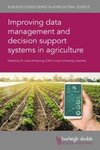
Advances in artificial intelligence (AI) for more effective decision making in agriculture
Leisa Armstrong, N Ghandi, P Taechatanasat, and Dean A. Diepeveen
This collection reviews and summarises the wealth of research on key challenges in developing better data management and desicion support systems (DSS) for farmers and examples of how those systems are being deployed to optimise efficiency in crop and livestock production. Part 1 reviews general ... Read more
-
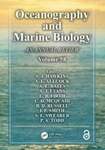
The oceanography and marine ecology of Ningaloo, a World Heritage Area
Mathew A. Vanderklift, Russell C. Babcock, Peter B. Barnes, Anna K. Cresswell, Ming Feng, Michael D. Haywood, Thomas H. Holmes, Paul S. Lavery, Richard D. Pillans, Claire B. Smallwood, Damian P. Thomson, Anton D. Tucker, Kelly Waples, and Shaun K. Wilson
The Ningaloo coast of north-western Australia (eastern Indian Ocean) hosts one of the world's longest and most extensive fringing coral reef systems, along with globally significant abundances of large marine fauna such as whale sharks. These characteristics – which have contributed to its inscription on ... Read more
-
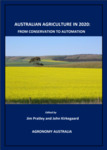
Chapter 6: Machinery evolution for conservation agriculture
Jack Desbiolles, Chris Saunders, James Barr, Glen Riethmuller, Gary Northover, Jeff N. Tullberg, and Diogenes Antille
Australia lies among the top five countries worldwide to adopt en masse conservation agriculture (CA) farming systems (Kassam et al. 2015). No-till (NT) practice is still growing having reached 80-90% of crop area in many regions (Llewellyn et al. 2012, see also Chapter 2). This ... Read more
-
Crustacean Fisheries
James W. Penn, Nick Caputi, Simon de Lestang, Danielle Johnston, Mervi I. Kangas, and Justin Bopp
This Crustacean fisheries research and management article provides an overview of the production from the world's major crustacean fisheries, their general biology and life history including information on the unusual growth processes of regular replacement of their exoskeleton (or molting) which all crustaceans undergo ... Read more
-
Chapter 10: Controlled traffic farming in precision agriculture
Diogenes Antille, Tim Chamen, Jeff N. Tullberg, Bindi Isbister, T A. Jensen, and Guangnan Chen
In the past few decades, there has been a continuous drive towards the development and adoption of larger, and more powerful, agricultural machinery. Larger machinery is often related with timeliness, higher work rates and lower labour requirements, which has led to significant improvements both in ... Read more
-
Chapter 18: Management Adaptation to Climate Change Effect on Fisheries in Western Australia
Nick Caputi, Simon de Lestang, Ming Feng, and Gary Jackson
Western Australia is an ideal location to examine biological and socio-economic implications of climate change on fisheries as its coast extends over 14–35°S encompassing tropical to temperate ecosystems. The marine environment is strongly influenced by the warm, low-nutrient, south-flowing Leeuwin Current. There has been a ... Read more
-
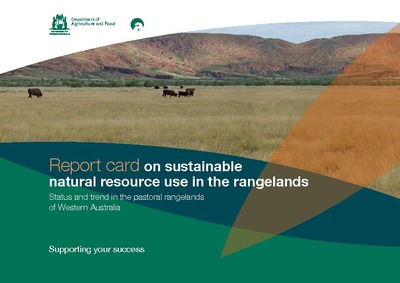
Report card on sustainable natural resource use in the rangelands: status and trend in the pastoral rangelands of Western Australia
Department of Agriculture and Food, Western Australia
This report card provides a regional overview of the status and trend of the natural resource base of the pastoral rangelands in Western Australia (WA). It covers the pastoral lease areas of the 2.2 million square kilometres of rangelands in WA (87% of the state). ... Read more
-
Salinity in Dryland Agricultural Systems: Challenges and Opportunities
D J. McFarlane Dr, Richard J. George, E G. Barrett-Lennard, and M Gilfedder
Dryland salinity is caused by a build-up of salts in the root zone of plants in non-irrigated areas to the extent that it affects plant growth. Salinity can have direct adverse effects on agricultural systems, but the mobilisation of salt from affected land often causes ... Read more
-
Chapter 24: Lobsters in a Changing Climate
B F. Phillips, Monica Perez-Ramirez, and Simon de Lestang
This chapter examines the latest information on climate change studies as they affect lobsters and considers case studies of five lobster species; Panulirus cygnus and Jasus edwardsii in Australia; Homarus americanus in the USA and Canada; Panulirus interruptus in the USA and Mexico and Panulirus ... Read more
-
Physical and Chemical Control of Wild Radish in Lupins at Ballidu
Mohammad Amjad, Abul Hashem, and Glen Riethmuller
Aim
To investigate the effect of on-row and inter-row physical and chemical weed control options on wild radish (weed population and crop damage) and performance of a lupin crop sown in wide rows at Ballidu.
Background
Wild radish has developed resistance to most of the ... Read more