

Works in this collection were published by the Department of Agriculture and Food, Western Australia. The DAFWA library is gradually scanning and adding electronic copies to this collection, starting with the more recent material. However, reader requests to have electronic copies added will receive priority. Requests may be emailed to the DAFWA Library
For further information go to our department's website.
-
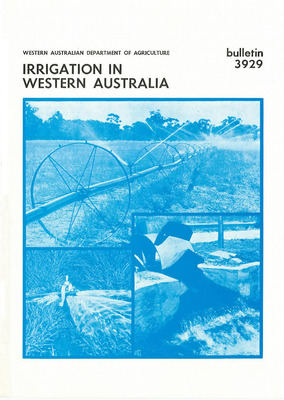
Bulletin 3929 - Irrigation in Western Australia
K S. Cole
Irrigation is essential in many parts of the world to produce essential food and profitable cash crops. Generally, those areas of land with less than 360 mm of rain spread over a distinct wet season of several months cannot grow crops for food or cash ... Read more
-
Bulletin 3967 - Cyanogenetic plants of Western Australia
T E H Aplin
This article deals with those native, naturalized and cultivated plants, which by virtue of contained cyanogenetic glycosides, are known to be poisonous or potentially poisonous to livestock in Western Australia.
Cyanogenetic glycosides are chemical compounds which contain a cyanogen (cyanide) radical combined with a sugar ... Read more
-
Bulletin 3992 - Nitrogenous fertilisers for cereal production
M. G. Mason
Because fertiliser prices continue to rise, it is becoming increasingly important to understand what affects the response to fertilisers by crops.
Among the many factors influencing crop response to nitrogen applications, the most important are the season, soil type, paddock history, time of application and ... Read more
-
Bulletin 3108 - An introduction to beekeeping in Western Australia
Western Australian Department of Agriculture
The purpose of this bulletin is to provide those wishing to keep bees, or to become commercial honey producers, with background information about beekeeping in Western Australia. This bulletin does not pretend to teach you how to keep bees or produce honey. This subject is ... Read more
-
Bulletin No 3573 - Wheat diseases in Western Australia
A. G. P. Brown and G. C. Mac Nish
Diseases caused by pathogenic organisms can seriously affect the yield of wheat. Some diseases are comparatively rare whereas others occur over a large area of the wheatbelt year after year.
it is important to be able to identify diseases correctly so that the appropriate control ... Read more
-
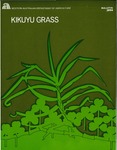
Bulletin no 3994 - Kikuyu grass : establishment, management and utilisation in the south west.
R. Sprivulis
Kikuyu grass (Pennisetum clandestinum), kikuyu for short, is a summer growing turf-forming perennial. In the absence of winter frosts and with sufficient summer moisture it remains green all year round. It is a vigorous and aggressive grass spreading by means of prostrate above and below ... Read more
-
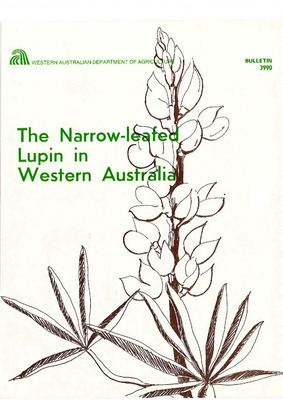
Bulletin 3990 - The Narrow-leafed Lupin in Western Australia
J. S. Gladstones
Lupins are new as a commercial crop, but may be very old as a food plant. Types of the Mediterranean white lupin (Lupinus albus L.) have been part-developed and used as a subsistence crop for 3 000 years or more. Likewise the pearl lupin (L. ... Read more
-
Bulletin No 3988 - Farm beef butchering
Western Australian Department of Agriculture
Killing and dressing beef on the farm can considerably reduce costs of meat and be very convenient. However practice is necessary for professional results, and some means of storage of the large quantity of meat is required. In a freezer, each litre of storage space ... Read more
-
Bulletin 3148 - Weeds in lawns
G. A. Pearce and R. D. Royce
IDENTIFICATION OF WEEDS IN LAWNS
Accurate identification of weeds is the first principle of weed control with modern chemicals. This is as true for weeds in lawns as any other weeds.
THE CONTROL OF WEEDS IN LAWNS
Most lawns have weeds growing in them at ... Read more
-
Bulletin 3955 - The Sheep skin industry in W.A.
H. E. Fels
The sheep skin industry is larger than most people realise. Its importance is shown by F.O.B. values of sheep skin exports from Australia in 1972/73, compared with sheep meats, wheat and iron ore,
F.O.B, values of exports - Australia, 1972/73
Sheep skins, with and without ... Read more
-
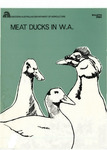
Bulletin 3984 - Meat ducks in W.A.
T. J. Purling
While the duck industry in the Eastern States of Australia has used several breeds, Western Australia has until recently relied on the Muscovy. Most overseas countries with well developed meat duck industries have used the Muscovy only to a minor extent.
The Australian Pekin has ... Read more
-
Bulletin No 3863 - Plants which cause Kimberley horse disease
A. L. Payne
Crotalaria crispata and Crotalaria retusa (Rattlepod), two plants responsible for Kimberley horse disease*, are, unfortunately, fairly widespread throughout the Kimberleys. Both species are apparently toxic in all stages of growth.
This bulletin is to assist pastoralists to:-
• Identify the two plants;
• Recognise the ... Read more
-
Bulletin No 3966 - Vitamin A and animal health
J. Johnson
Vitamin A is one of the essential vitamins for animal health. Grazing animals obtain their vitamin A requirements mostly from the carotene in green feed. This carotene is converted to Vitamin A in the intestinal wall and is passed to the liver and to a ... Read more
-
Bulletin No 3993 - The control of saffron thistle
G. A. Pearce
Saffron thistle is a primary noxious weed and is widespread throughout the drier parts of Western Australia. When growing in pasture its prickly growth habit discourages animals from grazing amongst it so that its presence results in the loss of feed. In crops it reduces ... Read more
-
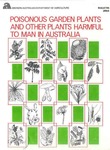
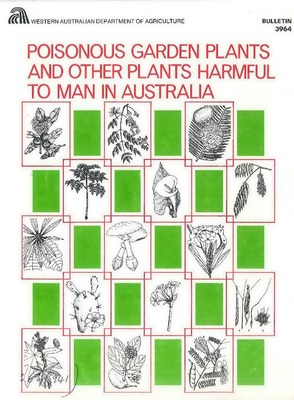
Poisonous garden plants and other plants harmful to man in Australia.
T E H Aplin
A number of commonly grown garden plants and many weeds found in gardens are know to be poisonous. Many species found outside garden situations are also harmful to man. All of these are potentially dangerous, particularly to children who are more likely to chew them. ... Read more
-
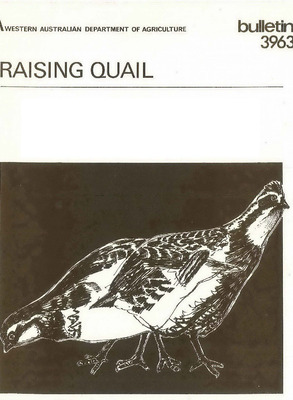
Bulletin No 3963 - Raising quail
P Smetana
Quail were first domesticated about a thousand years ago, but it was not until the beginning of this century that they were used for meat and egg production.
Commercial quail production is common in many parts of Asia, particularly where there are Chinese communities. In ... Read more
-

Fruit in W.A.
Department of Agriculture and Food, Western Australia
The main fruit growing districts of Western Australia are in the Mediterranean climate areas of the south-west. Apples, pears, stonefruit, citrus and vines are grown on a commercial basis. Figs, mulberries and olives are also grown, but not in big commercial quantities.
-
Bulletin 3933 - Trickle irrigation for home gardens
K Cole
The use of trickle irrigation in the home garden can save money, time and water.
Trickle irrigation is a concept first used in glasshouses in England, then applied to field crops in Israel and developed and refined in Australia and America. Today it is widely ... Read more
-
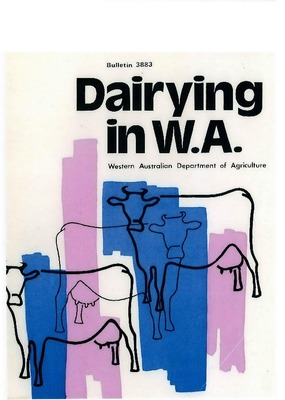
Bulletin no 3883 - Dairying in W.A.
Western Australian Department of Agriculture
Western Australia has a small dairy industry compared with its other rural production. However, the industry has consolidated over recent years.
Tree clearing and pasture development on existing holdings and the amalgamation of small dairy farms has led to a rapid increase in the area ... Read more
-
Bulletin No 3887 - Cattle yard construction
Western Australian Department of Agriculture
Good cattle yards allow animals to be handled quietly, safely and efficiently. If yards are well designed, animal uneasiness is minimised and so, too, are frayed tempers.
This bulletin outlines general points of cattle yard design and construction. There are many and varied cattle yard ... Read more
-
Dairying in W.A.
Department of Agriculture and Food, Western Australia
Western Australia has a small dairy industry compared with its other rural production. However, the industry has consolidated over recent years.Tree clearing and pasture development on existing holdings and the amalgamation of small dairy farms has led to a rapid increase in the area of ... Read more
-
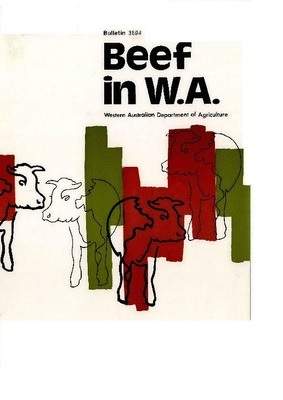
Beef in W.A.
Department of Agriculture and Food, Western Australia
There are four major regions of beef production in Western Australia, each suited to its own type of husbandry. In such a large area, climate plays an important part in limiting production off pasture and this is reflected in the different patterns of production that ... Read more
-
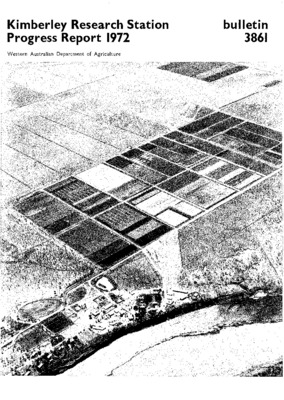
Bulletin No 3861 - Kimberley Research Station - Progress report 1972
J. R. McAlpine, R. H. Gunn, P. Jakobsen, R. Wetselaar, J. J. Basinski, N. J. Thomson, A. G. L. Wilson, D. H. Mackenzie, A. J. Millington, D. F. Beech, P. C. Owen, B. G. Williams, C. G. Blunt, and A. McR Holm
The systematic investigations of the potential of the Ord area for irrigated farming began during the Second World War when the possibilities of damming the river were first examined, initial soil survey was carried out, and agricultural experiments started. The Kimberley Research Station was established ... Read more
-
Bulletin No 3867 - Water for agriculture. Clearing cloudy or coloured water
N. E. Platell
THE suspended material in most water supplies is generally clay, although sometimes organic matter and materials precipitated from solution, such as hydrated iron oxides, may be present. Coloured waters are those waters that are still coloured, due to dissolved coloured matter, after suspended material has ... Read more
-
Bulletin No 3768 - Submitting plants for disease identification
M D. Marcley
THERE are several important points to remember when submitting plant material for disease identification by the Department of Agriculture's Plant Pathology Branch.
Firstly it is very important to collect a suitable sample because it is very difficult to determine the cause of a plant disease ... Read more