


Files
Download Full Text (74.5 MB)
Description
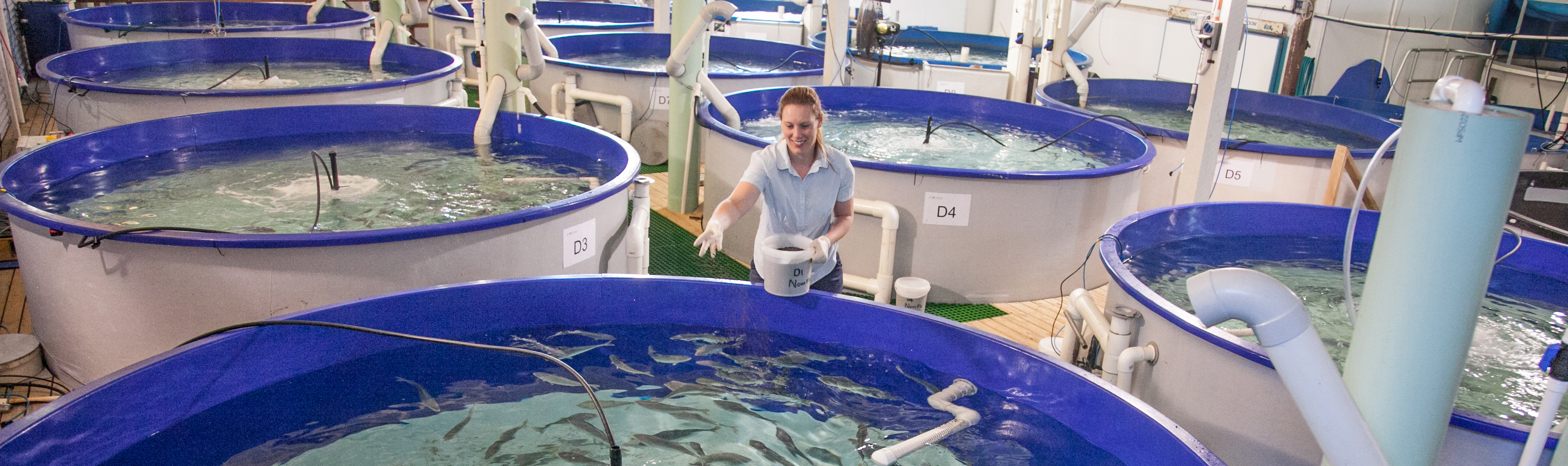
Australian abalone fisheries produce a high value, export-orientated products that provided 60% of the world supply in 1994 (Fleming, 2000). With wild abalone fisheries declining in countries worldwide, the interest in aquaculture products has increased substantially. The world production of abalone from aquaculture in 1999 was approximately 7,775 tonnes with only 89 tonnes (ca. 1%) being produced in Australia (Fleming, 2000). Abalone farming is expected to develop into a major industry and is a significant investment opportunity (McNamara, Victorian Aquaculture Strategy, May 1997). Future production from the numerous farms and sites either established, under construction or approved in Australia, could be substantial.
In Australia abalone larvae are produced by spawning recently collected wild broodstock, or wild or farmed abalone broodstock that has been held in conditioning systems for extended periods. The non-feeding larvae have a short larval phase e.g. 7 days at 17° C for Haliotis rubra. When larvae are ready for settlement they actively seek a suitable surface. In the natural environment abalone larvae settle on coralline red algae (Shepherd & Daume, 1996); however on farms the surface is typically vertical, spaced plastic plates that have been colonised by a variety of different microalgal species. When algal supplies decline, the juveniles may be weaned onto formulated feeds. They can be transferred to a variety of land- based tanks or sea- based systems (Freeman, 2001).
Abalone are slow growing, therefore any increased growth-rates resulting in a reduction in production time, have large cost benefits to the farmer. While some information is known about the early life history of abalone, very little of this information can be applied directly in commercial nurseries. The main areas of research to increase growth rates for juvenile abalone are in the following:
1. settlement systems design
2. dietary requirements for settled abalone
3. pre-settlement larvae quality
4. optimum water quality and other environment conditions for growth promotion
5. genetic improvement of abalone
ISBN
1 877098 34 5
ISSN
1446-5868
Publication Date
9-2003
Series Number
3
Publisher
Department of Fisheries, Western Australia
City
Perth
Keywords
Abalone, Aquaculture, Nursery production, Algal culture, Settlement, Growth, Haliotis rubra, Haliotis laevigata
Disciplines
Aquaculture and Fisheries | Genetics | Marine Biology | Nutrition
Recommended Citation
Daume, D.
(2003), Fisheries Research Contract Report No. 3 - Early life history of abalone (haliotis rubra, H. laevigata): settlement, survival and early growth. Final report for FRDC project 1998/306. Department of Fisheries, Western Australia, Perth. Book 3.
https://library.dpird.wa.gov.au/fr_frcr/7
This file is 74.5 MB. Files over 3MB may be slow to open. For best results, right-click and select "save as..."
Included in
Aquaculture and Fisheries Commons, Genetics Commons, Marine Biology Commons, Nutrition Commons



Comments
This contract report is not a formal refereed scientific publication and the Department will often publish sections of these reports in scientific journals, however, each report is reviewed internally for quality control purposes. This publication can be cited as Daume, S. (Editor) 2003. Early life history of abalone (Haliotis rubra, H. laevigata): settlement, survival and early growth, Final Report for FRDC Project 1998/306 Fisheries Research Contract Report No. 3, Department of Fisheries, Western Australia, 110 pp. Individual chapters can be referred to by citing chapter author(s), chapter title and page numbers within the above report.